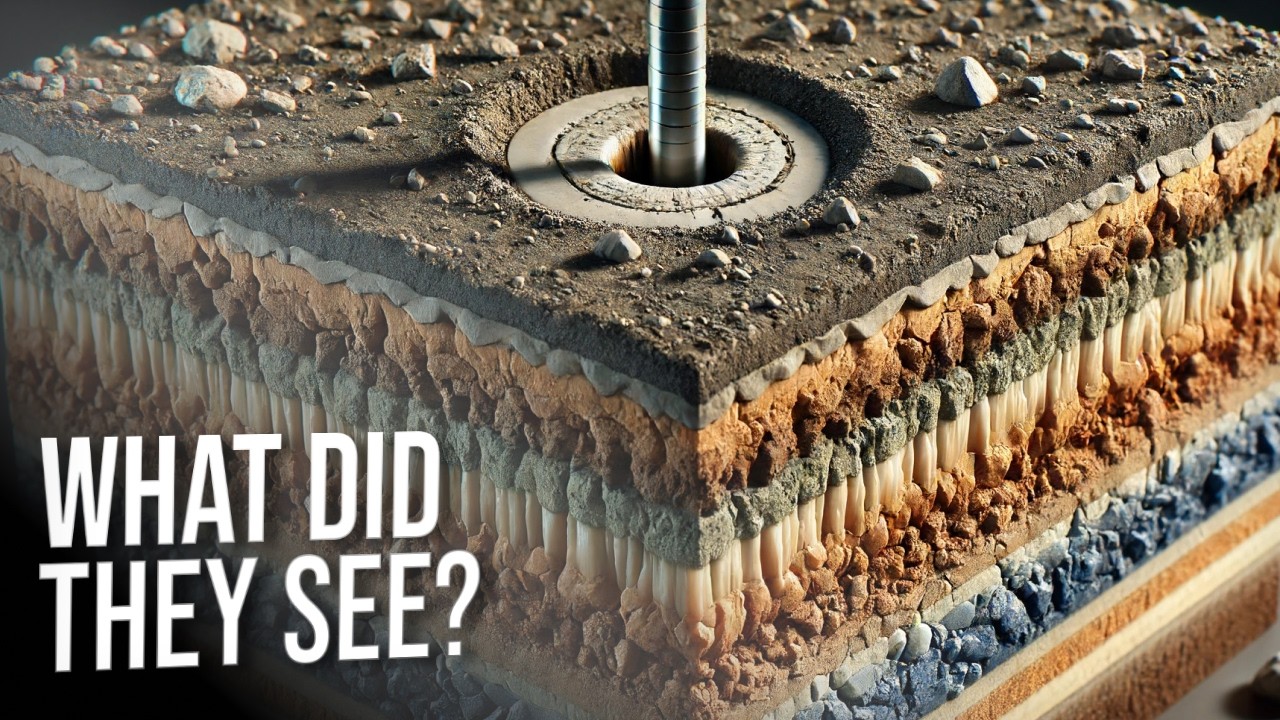
We've walked on the Moon, sent robots to Mars, and launched telescopes past the edge of the solar system. But the deepest hole ever drilled on Earth barely hits 12 kilometers — and it never even reached the middle of the crust. Turns out, going underground is harder than going to space.
The Kola Superdeep: Still the Record Holder After 50 Years
The Kola Superdeep Borehole in northwestern Russia holds the record as the deepest hole on Earth: 12,262 meters (roughly 7.6 miles), drilled starting May 24, 1970 on the Kola Peninsula. Unlike almost every other deep drilling project, this one had zero commercial motive — it existed purely to study ancient rock. Drilling stopped in 1992, a mix of too many accidents and equipment hitting its physical limits.
The rocks at the site clock in around 3 billion years old, making them one of the best geological time capsules on the planet. Scientists wanted to read that record. What they got was something nobody expected.
What They Found Down There
The geology textbooks were wrong. Going in, scientists predicted they'd hit a transition from granite to denser basalt at around 7 kilometers depth — a well-established model backed by seismic data. It never happened. At 12 km, there was still no basalt, just fractured Archaean gneiss all the way down.
Temperature was another shock. Models predicted a rise of about 11°C per kilometer. Between 2.2 and 7.5 km, the actual rate was 24°C per kilometer. By the time they reached 12 km, the rock was sitting at 220°C — far hotter than anyone had predicted. That heat made the rock behave almost like plastic, and the drill equipment couldn't handle going further.
The strangest find: 14 types of fossilized microorganisms in rock layers 2.8 billion years old — formations nobody expected to contain organic material at all. There were also high concentrations of methane gas. The Earth simply didn't match the model.
Two Other Deep Wells Worth Knowing
The Bertha Rogers well in Oklahoma (1974) reached 9,583 meters in 502 days — a commercial drilling speed record at the time. The team was hunting oil. What they found was a pocket of molten sulfur. Cost: $15 million. Result: project closed.
In Sweden, a 7-km borehole was drilled into the Siljan Ring crater in the late 1980s to test whether oil and gas originate from biological material at all, or from fluids rising from the Earth's mantle. The answer came back no — no commercially viable hydrocarbons. A mysterious black jelly-like substance recovered at 5,945 meters looked promising for a moment, but turned out to be degraded drilling lubricant transformed by extreme heat and pressure. A compelling red herring, nothing more.
Just How Deep Is Deep?
The Earth's crust is about 30 km thick under continents. The Kola borehole reached just 12 km — less than halfway through. The mantle begins around 30 km down and extends nearly 3,000 km. The outer core starts at 2,900 km. For comparison, the ISS orbits at about 400 km altitude. Going up is still easier than going down.
The deepest holes on Earth are engineering marvels that already overturned what we thought we knew about our planet's interior. And we've barely started — the tools needed to go further simply don't exist yet.
This article was created with AI help. If you want to watch the original video, please visit the link below.