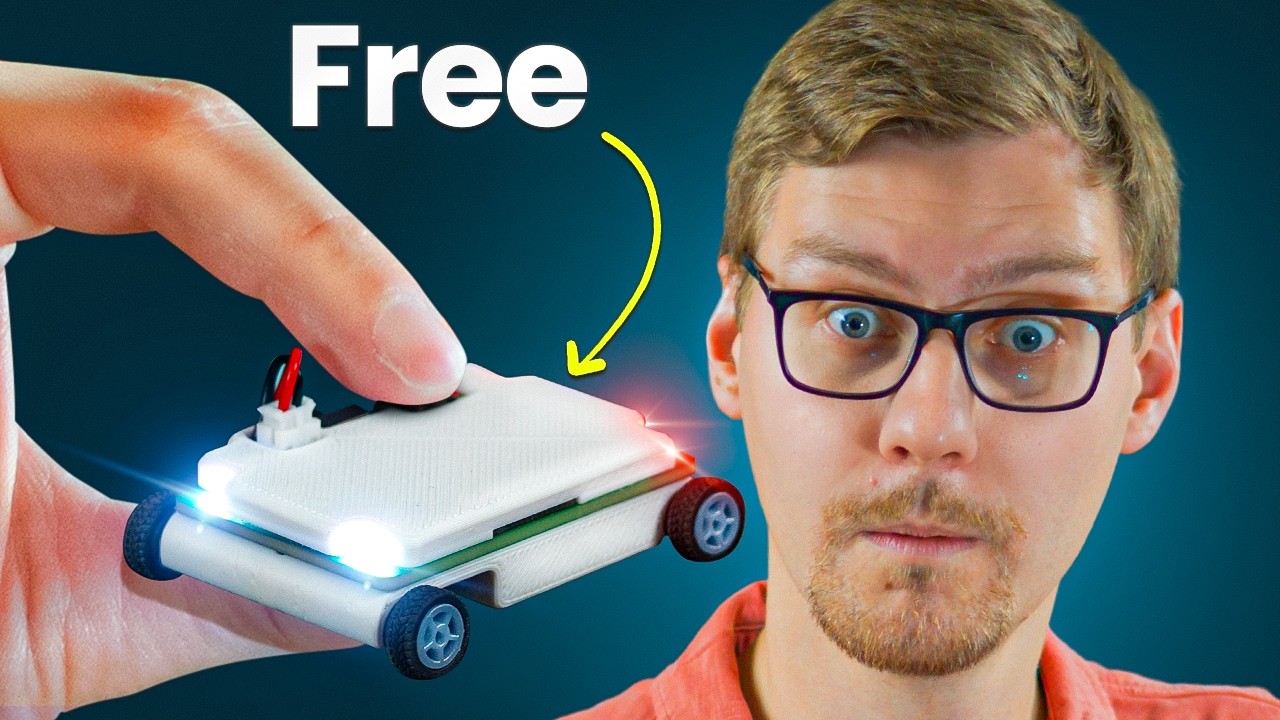
A tiny ESP32-powered RC car that started with a failed Kickstarter just went viral, got open-sourced, and now has five major upgrades that make it faster, prettier, and way easier to hack. If you've been watching the microRacer project, here's what changed — and why it matters.
What Is the microRacer?
The microRacer is a pocket-sized, ESP32-based RC car with a clever trick: it reacts to what it drives over. Sensors on the bottom detect colors and magnets embedded in a track surface. Drive over a "mushroom" marker and the car speeds up. Hit a "banana" and it spins out. Think Mario Kart, but you build it yourself.
It runs on an ESP32, charges via USB-C, has no app — just hardware you can dig into. Everything: firmware, PCB files, CAD designs — is fully open source. After the creator shared the project publicly following a failed crowdfunding campaign, Hackaday, Hackster, and Adafruit all picked it up within days. The comments blew up. Now the project is back with five big improvements.
The 5 New Upgrades
1. Addressable RGB LEDs The cars now have color LED headlights, tail lights, and a center indicator diode. Each car can show a unique random color at a button press on the controller — handy for telling multiple cars apart mid-race. It looks genuinely great in motion.
2. A Much Better Steering Algorithm The original steering was rough by the creator's own admission. The new algorithm is smoother and more precise — he demos slaloming through tight obstacles with ease. The controller is custom-built, but the project is open source, so wiring up an Xbox-style controller via Bluepad is a real option.
3. Direct USB Programming The ESP32-H2 chip can output UART directly over USB, which means no separate programmer is needed. Plug in the same USB-C cable you use to charge, and you can flash firmware or debug right away. The controller got the same treatment. The chassis is cleaner for it too — no awkward USB port sticking up from the top.
4. Protected Battery Enclosure The battery now sits in a dedicated compartment built into the chassis rather than being exposed underneath. The top surface is completely flat, giving you a blank canvas: stickers, Lego figures, 3D-printed bodywork, painted shells — the creator's kids have been going wild with it.
5. Custom Injection-Molded Tires The headline upgrade. New tires improve grip, handling, and overall look. If you're building from scratch, you can 3D print them instead — the creator kept the design open. One community member has already adapted the wheel mount to accept standard Lego wheels, so there's no single right way to do it.
Kits, Community, and What It Costs
For the first time, the creator is selling build kits in the US, Canada, Mexico, and Europe. PCBs come fully assembled; you handle the final build and a bit of soldering. Kit buyers also get access to a private community with live Q&As and step-by-step assembly walkthroughs — handy if you're new to this kind of hardware project.
Not ready to buy? The complete design files are free. Sign up for the mailing list and you'll receive everything when the first kits ship.
Worth Building?
The microRacer is one of the more honest open-source hardware projects around: genuinely playable, hackable by design, and improving with each iteration. The direct USB programming and injection-molded tires fix the two most obvious friction points from the original. If you're into ESP32 tinkering or want a hands-on build that's actually fun to drive at the end, this one earns a spot on your workbench.
This article was created with AI help. If you want to watch the original video, please visit the link below.