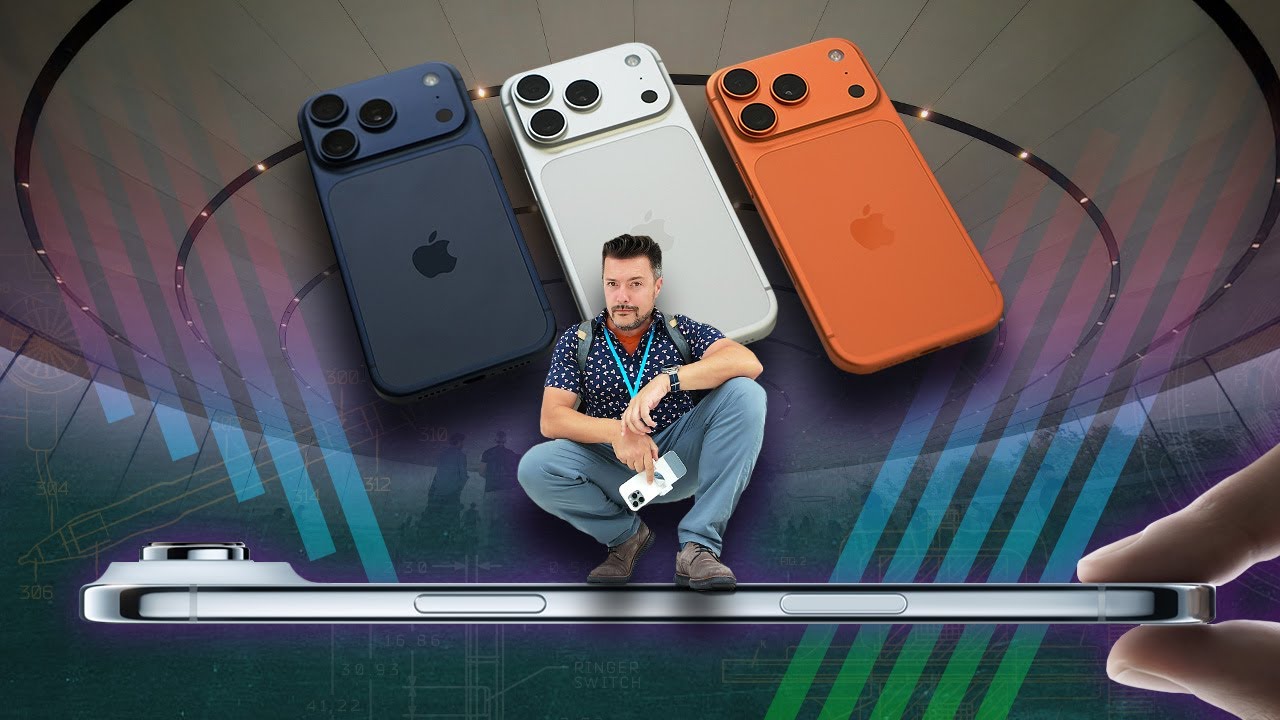
Apple's pre-launch leaks made these phones look like safe, derivative updates. Then people actually held them — and the conversation changed. The iPhone Air and iPhone 17 Pro are the most visually distinct iPhones in close to a decade, and the reasons why are more interesting than the spec sheets let on.
iPhone Air: Thin Done Right (Mostly)
At 5.6 mm thick, the iPhone Air is absurdly slim — but Apple didn't just shave the whole device down uniformly. The internal layout is almost entirely reorganized: nearly all the core components are packed into the raised plateau on the back, with the rest of the body largely given over to battery. That design choice makes the thinness feel intentional rather than reckless.
The frame is grade 5 titanium, and Apple used ceramic shield on both the front (second-gen) and the back, so it isn't fragile by design. The 6.5-inch display reads as even larger than it sounds, thanks to the slim bezels the thinness enables.
The compromises are real, though. You get a single 48 MP rear camera — no ultrawide. The stereo speaker setup iPhone users have had for years is gone, replaced by a single earpiece speaker. And if you want the battery life back, the new MagSafe battery pack exclusive to the Air adds about 65% more capacity for an extra $100 on top of the $999 starting price.
What Apple didn't cut: the Action Button, the Camera Control, and MagSafe itself. After seeing those disappear from the iPhone 16E, their presence here is a genuine relief.
iPhone 17 Pro: The Aggressive One
If the Air is the pretty phone, the 17 Pro is the brawler. Apple switched back to aluminum for the Pro and Pro Max — better thermal conductivity than titanium — and added a vapor chamber cooling system, a first for iPhone. Under sustained loads, that should help the chip maintain performance longer than previous models.
The design shift is hard to miss: pronounced panels, bold geometry, a look that has more in common with Xiaomi or Oppo's flagship aesthetic than anything Apple has shipped before. The color options follow suit — cosmic orange, deep blue, and a clean white Apple calls "silver." These are real colors, not the subdued muted tones Pro buyers have endured for years.
Camera-wise, all three rear sensors are now 48 MP, and the telephoto moved from 5x to 4x to enable 100 mm and 200 mm crop options for portraits. The Pro starts at $1,099; Pro Max hits close to $2,000 with the new 2 TB storage option.
The Selfie Camera Is Actually Interesting
Both the Air and the 17 Pro get Apple's new Center Stage front camera: an 18 MP square sensor that replaces the old rectangular 12 MP one. The square shape means the phone can shoot portrait or landscape selfies without you rotating it — the sensor crops and reframes dynamically based on how many people are in the shot. It also stabilizes video better and finally brings picture-in-picture dual capture to iPhone, something Android users have had for years.
Who Should Buy Which
The iPhone Air is for someone who wants a premium, genuinely different-feeling phone and can live without an ultrawide camera and stereo speakers. It's the most pocket-friendly iPhone Apple has ever made.
The iPhone 17 Pro is for people who want the full kit: better thermals, all three cameras, the bold new look, and no compromises on performance. If cosmic orange doesn't appeal, deep blue and white are cleaner options — but pick the orange at least once before you decide.
Both phones land in a lineup that, for the first time in a while, feels like Apple is taking visual risks. Whether those risks pay off in day-to-day use is what the full reviews will sort out.
This article was created with AI help. If you want to watch the original video, please visit the link below.